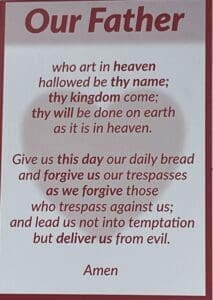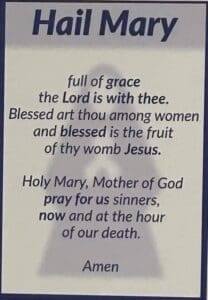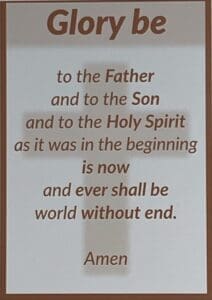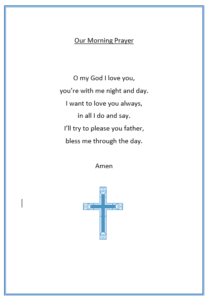
Our Academy Prayers

                Prayer

“Trust in him at all times, you people; pour out your hearts to him, for God is our refuge.” — Psalm 62:8

At St. Mary’s, prayer lies at the heart of everything we do. Grounded in our Catholic faith, it influences not only how we worship, but also how we relate to one another, shaping our attitudes and guiding our daily actions. Through dedicated times of prayer each day, we support our children in developing faith, gratitude, and a spirit of reflection.

Each day begins with prayer, placing everything we do into God’s hands and inviting His guidance into our learning, friendships, and choices. This helps create a calm and reflective start, reminding our pupils that they belong to a caring, Christ-centred community.

Before lunch, we pause again for a short moment of prayer. In the midst of a busy day, this offers stillness and encourages mindfulness, as well as respect for the food we are about to share and the company around us. After lunch, we take time to give thanks, recognising the many blessings we receive and nurturing a spirit of gratitude.

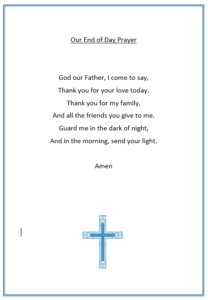
At the end of the day, we come together once more in prayer. This provides an opportunity for children to reflect on their learning, seek forgiveness where needed, give thanks for their achievements, and ask for God’s care and protection as they return home to their families.
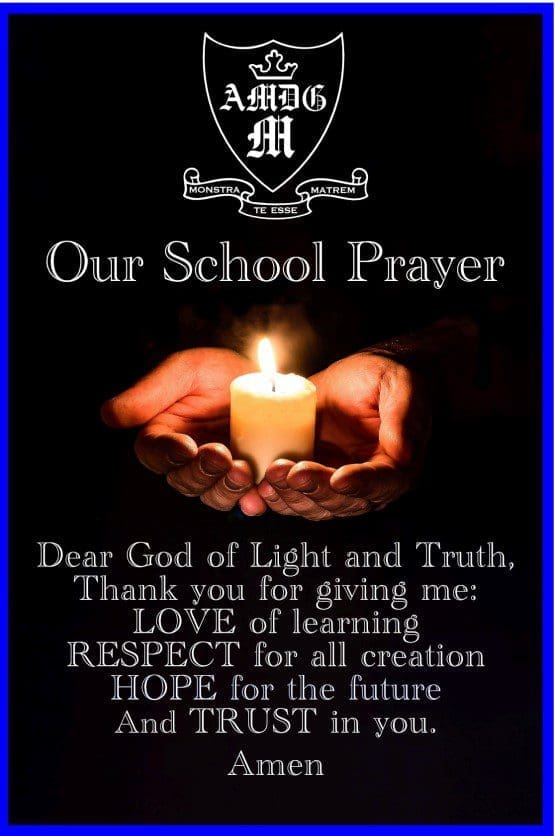
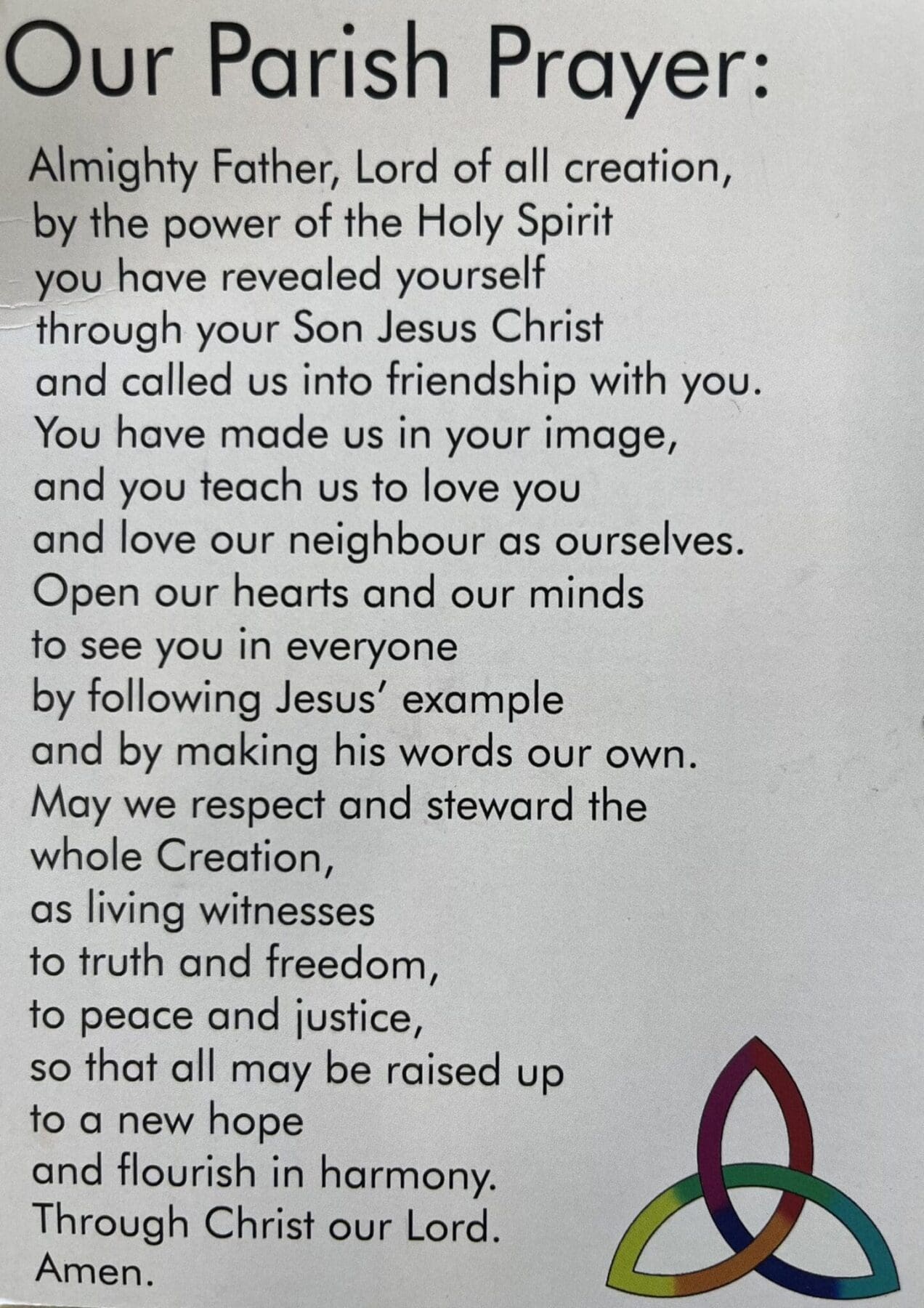
 Our Prayers

.

Prayer Focus

Alongside the prayers we share throughout the day and the additional opportunities for worship, children are warmly encouraged to visit the school chapel. Here, they can spend meaningful time in prayer, expressing their thoughts and feelings, and speaking with members of the Chaplaincy team.

Across the school, a variety of prayer stations are available. Each one centres on a different theme, offering children a calm and reflective space where they can pause, feel at peace, and deepen their connection with God.

Prayer Provision

The place of Prayer and Liturgy in the weekly life of our school

We endorse the belief that prayer and liturgy considers the religious and educational needs of all who share in it: • Those who form part of the worshipping community in church • Those for whom school may be their first and only experience of church • Those from other Christian traditions – or none • Those from other faith backgrounds. • It will be an educational activity or experience to which all can contribute and from which all can gain.

Worship in this school is more than just a legal requirement. It is an integral part of school life and central to the Catholic tradition.

The Aims of Prayer and Liturgy

We believe that prayer and liturgy in our school aims to provide opportunity for all pupils and staff: • To contemplate something of the mystery of God • To reflect on spiritual and moral issues • To explore their own beliefs • To respond to and celebrate life • To experience a sense of belonging and develop community spirit • To develop a common ethos and shared values • To enrich religious experience • To grow in liturgical understanding and development • To reinforce prayers which are part of the Catholic tradition • To reinforce positive attitudes • To participate fully • To take time out ‘to wonder at’, ‘to come to terms with’ and ‘to give worth to.’

Principles

We will endeavor that Celebration of the Word in this school will: • Give glory and honour to God • Be a quality activity, fundamental to the life of the school and its Catholic character • Give children positive liturgical experiences, appropriate to their age, aptitude and family backgrounds in order to prepare them for the liturgical life of the Church. • In order to do this, celebrations will: – Be kept small wherever possible or appropriate to help to personalise the experience; – – Be short and appropriately paced Be simple, including a range of experiences offered in a variety of groupings and in a variety of settings.

Organisation of Prayer and Liturgy

Monday – Whole school Gospel Prayer and Liturgy (led by Headteacher / Deputy Head)
Tuesday – Hymn Singing linked to the seasons of the liturgical calendar
Wednesday – KS2Celebration of the Word / KS1 pupil-led class liturgies in own classroom
Thursday –KS1 Celebration of the Word / KS2 pupil-led class liturgies in own classroom
Friday – Whole school Celebration of learning – linked to Catholic Social Teaching and Virtues


Planning Prayer and Liturgy in Class

EYFS and KS1

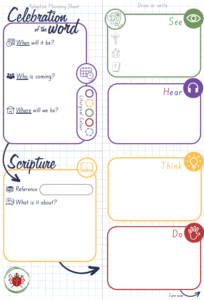
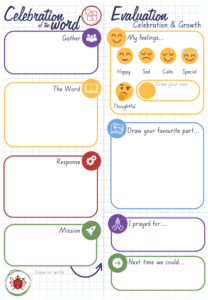
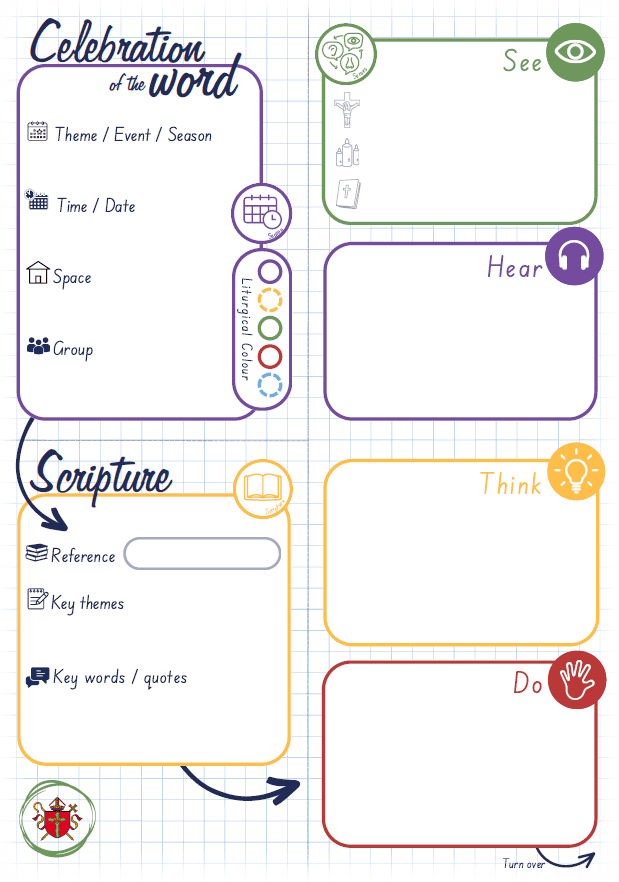
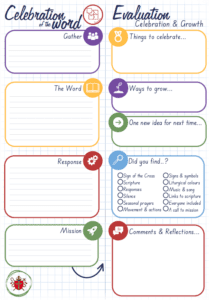
In EYFS and Key Stage 1, pupils are introduced to prayer and liturgy through simple, structured, and largely teacher-led experiences. Worship follows the pattern of Gather, Listen, Respond, Go Forth, with adults modelling each stage. Children engage through visual symbols, storytelling, and short moments of reflection, helping them develop confidence and an understanding of prayer.

In EYFS, participation is sensory and interactive, while in Key Stage 1 pupils begin to contribute ideas, suggest prayers, and take on small roles with support.

KS2

There is a clear progression into Key Stage 2, where pupils gradually take greater responsibility. In lower KS2, children lead parts of the liturgy, such as readings or intercessions, and by upper KS2 they plan and lead worship more independently, demonstrating deeper understanding and active participation.