Writing

Writing Intent at St Marys

At St Mary’s Catholic Primary Academy, we strive to give our children the best start in establishing secure foundations in writing. Our primary intent is to create avid readers which we believe is the foundation for any greater depth writer.

We recognise the importance of nurturing a culture where children take pride in their writing and write clearly and accurately whilst selecting and adapting their language and style to suit a range of contexts, purposes and audiences.

We plan engaging units of work in order to enthuse, inspire and motivate our children, which are underpinned by core texts from our carefully developed reading spine. Our learning environments are stimulating but supportive and calming to ensure children are able to access the scaffolds needed to support their developing talk and writing.

It is our intention that by the end of their primary education, all of our pupils will be able to speak and write fluently so that they can communicate their ideas effectively and with a developed awareness for purpose and audience.
Implementation

In Writing, we follow the ‘Talk For Writing’ approach. We teach the children to write a range of text types based around the grammar, spelling and punctuation skills required for each particular year group. This form of writing encourages independence and appeals to all types of learners due to the way in which it is taught.

There are 3 distinct sections – IMITATE, INNOVATE and INVENT.

During the Imitate stage, the children learn the text, or a section of the text, off by heart, using a story map and actions to help. They then deconstruct the text, looking at the different features and learn how to apply the different grammatical aspects to their own work.

During the Innovate stage, the children participate in shared writing where they rewrite the story, changing just one aspect. This helps the children to further internalise the pattern and structure of the text as well as reinforce the tools needed for when they write their own piece of text.

During the final stage, Invent, the children independently write their own text based on, or around, the class text which has been studied across the learning sequence.

If you would like to know more, visit http://www.talk4writing.co.uk/about/

TALK FOR WRITING LESSON SEQUENCE STRUCTURE

The Teaching of Vocabulary

“The words that will have the biggest impact on a child’s vocabulary are words that you see often in books, but hear rarely in speech.

Words such as: derive, evoke, surreptitious, capricious, incredulous and eradicate all fall into this category.”


Tier 1

This is the simplest tier.

These are words that most students will pick up through natural, everyday conversation. They include common nouns like ‘clock’, ‘chair’ or ‘house’, verbs like ‘walk’ and ‘run’, or adjectives like ‘sad’ and ‘happy.’  These words don’t normally require explicit teaching.


Tier 2

In order to improve pupils’ literacy, these are the words you want to focus on.

They are ambitious words, such as ‘emerge’, ‘analyse’, ‘peculiar’ and ‘context’, that your students are likely to come across in a variety of contexts and across all subjects, but aren’t used much in everyday conversation. For example, the Tier 2 word ‘soar’ can add more sophistication and specificity to a student’s understanding of the word ‘fly’. They will be able to understand that soaring isn’t just flying, but flying very high in the air.


Tier 3

Tier 3 words are subject-specific, used within a particular field.

This is the language of scientists, mathematicians, historians, and literary critics. For Maths, this includes words like ‘denominator’, while science lessons might require students to understand ‘photosynthesis’. Often, these words are integral to teaching content for certain subjects.

Within our Talk For Writing learning sequence, we also include key skills sessions to support the writing process. We also have separate skills sessions in Grammar, Vocabulary and Punctuation.

The children are given opportunities to learn the key knowledge and skills, and apply across all of their writing in the curriculum.

Teaching Of Spellings Grammar And Punctuation At St Marys

HANDWRITING

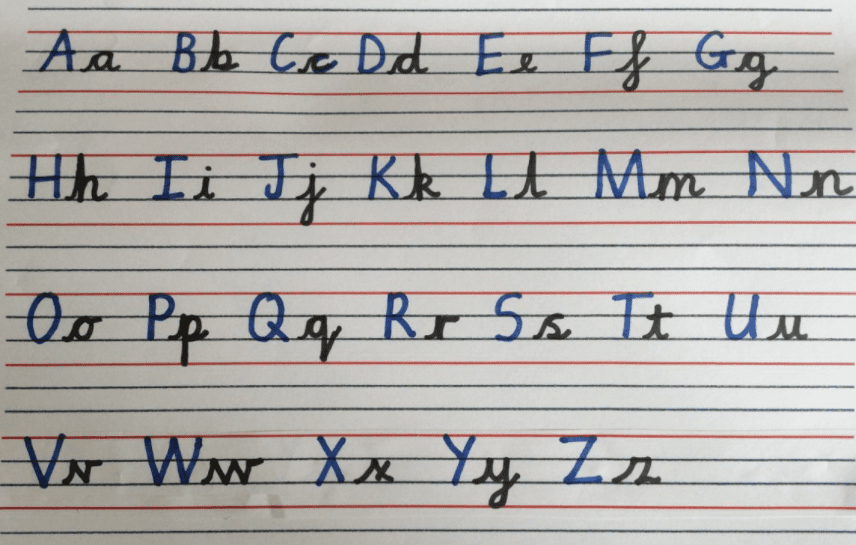
In school, the children are taught to form their letter correctly. Our English books contain handwriting lines to help them to write their letters at the correct size each time.

The Teaching Of Handwriting At St Marys

Impact

Assessment

A constant cycle of assessing, monitoring, target setting and pupil feedback are instrumental in supporting children’s writing development.

Teacher-pupil conferencing is a key strategy used in writing lessons to assess pupils’ understanding and ensure all pupils receive valuable verbal feedback from teachers on successes and next steps.  The results of such discussions have a direct impact on the teaching materials and strategies employed immediately following the assessment.

Marking of pupils’ work is important part of on-going assessment and all writing is marked in line with the school marking policy. This helps children to see what they have done well, note errors and know the ‘next steps’ in their learning. This is initially done through pupil conferencing, with targets being noted in their writing to help the pupils to improve further.

Assessment of each piece of writing at the end of a teaching sequence is completed using the Writing Assessment grids. Pupils will also use these during discussions with peers and adults.

Moderation of teacher assessment is undertaken regularly for quality assurance and ongoing staff development. St Mary’s staff moderate writing using national exemplification materials. In addition, pupils’ writing is also moderated by other teaching professionals in local clusters of schools.

Formal assessment is recorded on the school assessment tracking system.